Everyone Is Cheating Now
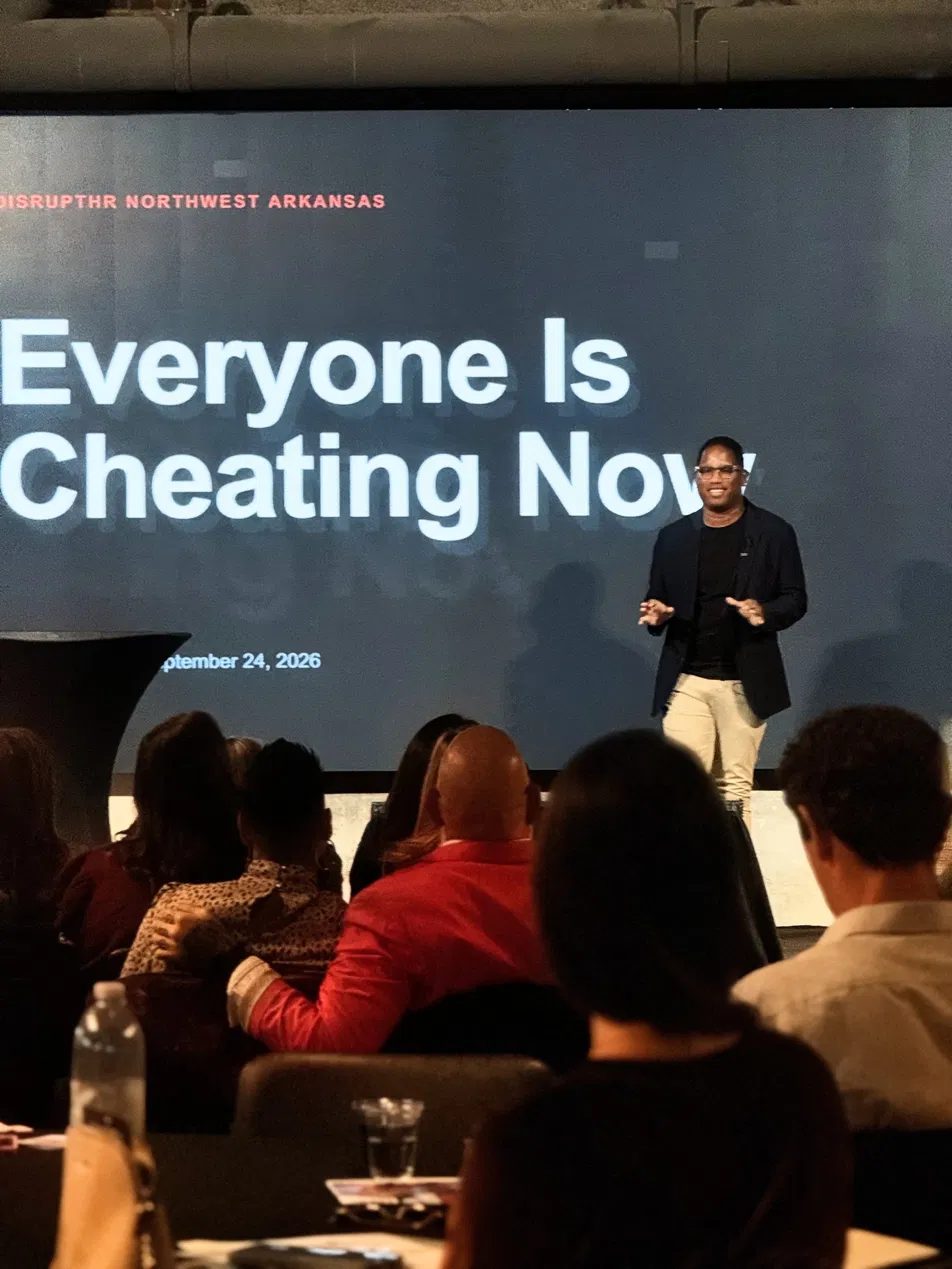
I had five minutes and twenty auto-advancing slides at DisruptHR Northwest Arkansas on Thursday. One message.
“Everyone is cheating now.”
The recruiters laughed. Then they stopped. Because they already knew.
The open secret
Here is what hiring looks like in 2026.
A candidate opens a job posting and has AI tailor their resume to it. They land the interview and run a real-time copilot that feeds them answers. AI writes the thank-you note. Every touchpoint is mediated, optimized, gamed.
On the other side, the company screens the resume with AI. Scores the interview with AI. Runs a deepfake check nobody quite trusts. Every touchpoint is filtered, scored, doubted.
Both sides know the other side is doing it. Both sides do it anyway.
We built a hiring process where the optimal strategy for everyone is deception.
The math stopped working
Job openings are up 13% year over year. Hires are up 2%. That’s the iCIMS September report. Openings have outpaced hires for three straight months.
More chairs. Roughly the same number of people sitting in them.
For a typical corporate role posted online, the funnel looks like this. 400 apply. 40 resumes get a real read. 6 get interviewed. 1 gets hired.
360 people were never seen by a human. 394 never had a conversation. Not rejected. Not evaluated and found wanting. Just never considered.
Here is the bottleneck nobody talks about. The ceiling was never human judgment. It was human hours. A recruiter can do maybe 25 real interviews a week. Everything upstream, the resume screens, the keyword filters, the knockout questions, exists to serve that ceiling. Not the candidate.
So we built a system optimized for processing resumes instead of meeting people. Then both sides automated the gaming of it. The system no longer selects for the best candidate. It selects for the best cheater.
Why nobody stops
There is a bleak logic to this. Once candidates believe every other candidate is using AI, going without feels like bringing a knife to a gunfight. Once companies believe every resume is AI-polished, trusting any of them feels naive.
Both sides are behaving rationally. Both sides are making it worse.
The honest candidate, the one who just shows up as themselves, doesn’t lose because they’re worse. They lose because the system can no longer tell the difference.
Detection is theater
The usual answer is detection. Better deepfake checks. AI-use detectors. Proctored interviews. I get the instinct. If cheating is the disease, catching cheaters feels like the cure.
It isn’t.
Detection catches the candidates who are bad at cheating and misses the ones who are good at it. It adds cost, friction, and another vendor, and restores nothing. Every detection tool creates a market for a better evasion tool. The evader has to win once. The detector has to win every time. We ran this race with plagiarism software and keyword stuffing. We lost both times.
You can’t detect your way out of an equilibrium. You have to change the game.
Talk first. Sort after.
The fix is structural, and it’s embarrassingly simple. Interview every candidate on day one.
When everyone gets a real conversation, the cheaters lose their edge. A copilot can feed you a polished first answer. It struggles with the third follow-up, the one built on what you just said. Real interviews probe. Probing is where rehearsed answers fall apart and real thinking shows up.
And the quiet candidates, the ones whose resumes would never survive the screen, finally get a shot.
This is the bet we’re making at RightMatch. Not better screening. AI that interviews all 400 instead of ignoring 394. The ceiling was human hours. Hours are exactly what AI has in abundance.
Talk first. Sort after. It sounds like a slogan. It’s just what hiring was supposed to be before we industrialized it.
A game worth playing straight
Detection treats trust as something you verify, one transaction at a time, with better software. But trust was never a verification problem. It’s a design problem. Build the process so honesty is the winning strategy, and you don’t need to police anyone.
Interviewing everyone isn’t just fairer. It makes gaming the process cost more effort than being good.
Everyone is cheating now. The answer isn’t better referees. It’s a game worth playing straight.
Where this goes
Here is where I think hiring is in 18 months.
The resume is dead as a screening tool. Not deprecated. Dead. Nobody reads a document both sides know was written by a model.
The first interview happens the day you apply, and it happens with AI. Every candidate gets one. Not the 6 who survived a keyword filter. All 400. The recruiter’s job moves from deciding who gets a conversation to deciding what to do with 400 of them.
Detection vendors will have a good year and then get squeezed. Once the interview is the screen, there’s nothing upstream worth faking. You can’t AI-tailor a conversation you haven’t had yet.
The copilot arms race keeps going, and it stops mattering. Interviews get adaptive enough that a scripted first answer buys you nothing. The candidate who can think out loud beats the candidate with the best prompt.
And the honest candidate wins again. Not because we caught the cheaters. Because we stopped running a process that rewarded them.
That’s the hiring process I want to live in. So I’m building it.